TO LEARN IS TO GROW
Learning Center
We do our research and publish our results. Should probably call this the Growing Center.


Growth Hacking Explained: Smarter Marketing, Stronger Brand
Running a business means making a lot of decisions with limited time, limited resources, and a lot of moving parts.
You might be trying to bring in leads, improve your website, follow up with prospects, stay visible online, and take care of your current customers all at the same time.
That can get messy fast.
A growth-driven mindset gives you a more practical way to approach it. Instead of chasing random ideas or guessing what might work, you test, learn, and improve as you go.
That is the heart of growth hacking.
But don’t think this is about tricks or shortcuts, as the idea of growth hacking is about paying attention to what is working, using real data to guide your next move, and making small improvements that support long-term growth.
For small business owners, this can be especially useful. You do not need a massive budget to grow, but you do need clarity, consistency, and a willingness to keep refining how your business shows up.
Want a clear picture of where your business stands online? Start with LOJO’s free marketing audit. Get a report that gives a simple look at what’s working, what may need attention, and where your next best opportunity could be.

What is Growth Hacking?
Growth hacking is a way of approaching business growth through testing, creativity, and data. It became popular in the startup world because many early-stage companies needed to grow quickly with smaller budgets, smaller teams, and less brand recognition.
Growth-focused teams had to get practical. They looked for creative ways to attract users, bring in leads, improve conversions, and keep people engaged.
Today, the same idea can apply to small businesses.
A growth-driven mindset helps you ask better questions:
What is helping people find us?
Where are leads dropping off?
What message is getting the best response?
Which marketing efforts are creating real conversations?
What can we improve before spending more money?
This keeps your growth efforts grounded in what is actually happening, not just what you hope will work.
The History of Growth Hacking
One of the most well-known examples of growth hacking comes from Dropbox.
In its early years, Dropbox had a useful product, but it still needed more people to try it. Cloud storage was not as familiar then as it is now, so the company had to find a simple way to help users understand the value and share it with others.
That led to one of its most famous growth moves: a referral program. When users invited a friend, both people received extra storage. It was simple, useful, and directly connected to what Dropbox offered. The more people shared it, the more the product spread.
The results were hard to ignore. Dropbox reportedly grew from 100,000 registered users to 4 million in just 15 months.
That growth did not happen by chance. Dropbox understood what its users wanted, tested a practical idea, and made sharing feel worthwhile for both sides.
Later, Sean Ellis, an entrepreneur, angel investor, and startup advisor, helped popularize the term “growth hacking” to describe this kind of focused, growth-driven work.
For small businesses, the takeaway is not to copy Dropbox. The real lesson is to look at how your customers already behave, find small ways to make the next step easier, and keep improving from there.
Growth often comes from simple ideas that are tested, refined, and repeated over time.

What Does a Growth Hacker Do?
A growth hacker focuses on finding practical ways to help a business grow.
That may include:
Testing new marketing ideas
Improving lead generation
Studying customer behavior
Reviewing website performance
Improving the sales funnel
Automating repetitive tasks
Finding ways to turn interest into action
In a small business, this may not be a separate job title. It may be the owner, a marketing partner, a sales manager, or a small team working together.
The work usually comes down to a simple question:
What is the clearest way to help more of the right people find the business, understand the offer, and take the next step?
From there, you look at what is working, improve what needs attention, and build a stronger path from awareness to customer.
Growth Hacking and Digital Marketing: Is There a Difference?
Growth hacking and digital marketing are closely connected, but they are not exactly the same thing.
Digital marketing is the broader practice of reaching, educating, and converting people through online channels. It includes strategy, messaging, content, SEO, paid ads, email, websites, social media, analytics, and follow-up.
Growth hacking sits inside that broader practice, but it is also a mindset. It brings a strong focus on testing, learning, and improving with the resources you already have. It pushes you to look at your marketing as something you can keep refining based on what people actually do.
Gagan Biyani, an entrepreneur and growth hacker who led marketing at companies like Lyft and Udemy, described a growth hacker as a marketer working with a different set of challenges and tools. He pointed out that startups often deal with more uncertainty, bigger growth goals, and fewer resources than larger companies.
Small business owners can relate to that. Most are not working with unlimited budgets or large marketing teams, and thus need their marketing to be practical, focused, and tied to real outcomes.
In that sense, a growth-driven mindset helps you look at your digital marketing with sharper questions:
Are we attracting the right people?
Are leads taking the next step?
Are we following up quickly enough?
Are we learning from what works?
Are we spending time and money in the right places?
The two work best together. Digital marketing gives your business a presence online, while a growth-driven mindset helps you keep improving how that presence turns attention into action.
Do I Need Any Special Skills To Do Growth Hacking?
So now you understand that essentially, growth hacking is an approach to doing marketing. Arguably, it’s a more practical way of building a brand and bringing in new business—something entrepreneurs can clearly appreciate.
The growth hacker sprang from the need to get things done, especially when traditional marketing techniques just aren’t applicable. Hence, the heavy emphasis on digital marketing.
With that in mind, anyone can get into a growth hacking mindset. It starts with a few simple habits.
1. Pay Attention to the Right Data
Data helps you make better decisions. However, not all numbers matter equally. Website traffic, social media likes, and email opens can be helpful, but they do not tell the full story. You also want to look at signals that connect more closely to business growth, such as:
Calls
Form submissions
Demo requests
Consultation bookings
Quote requests
Email replies
Returning customers
Lead quality
The goal is to move beyond “Are people seeing us?” and ask, “Are the right people taking the next step?”
2. Stay Creative
Growth often requires problem-solving.
Maybe your leads are coming in, but they are not responding. Maybe people visit your website but do not fill out the form. Maybe your emails are being opened, but no one is clicking.
A growth-driven mindset helps you look for practical improvements, which could mean:
Rewriting a headline
Simplifying a contact form
Adding a stronger call-to-action
Creating a better follow-up sequence
Updating your service page
Clarifying your offer
Testing a different lead magnet
Small changes can create better results when they are tied to a clear goal.
3. Stay Curious About Your Customers
Growth starts with understanding people.
Why do customers choose you?
What problems are they trying to solve?
What questions do they ask before buying?
What makes them hesitate?
The more you understand your customers, the easier it becomes to create marketing that feels helpful and relevant.
This is especially important for small businesses. Your advantage is not always having the biggest budget. Often, it is knowing your customers better and communicating more clearly.
The Growth Hacker’s Toolbox
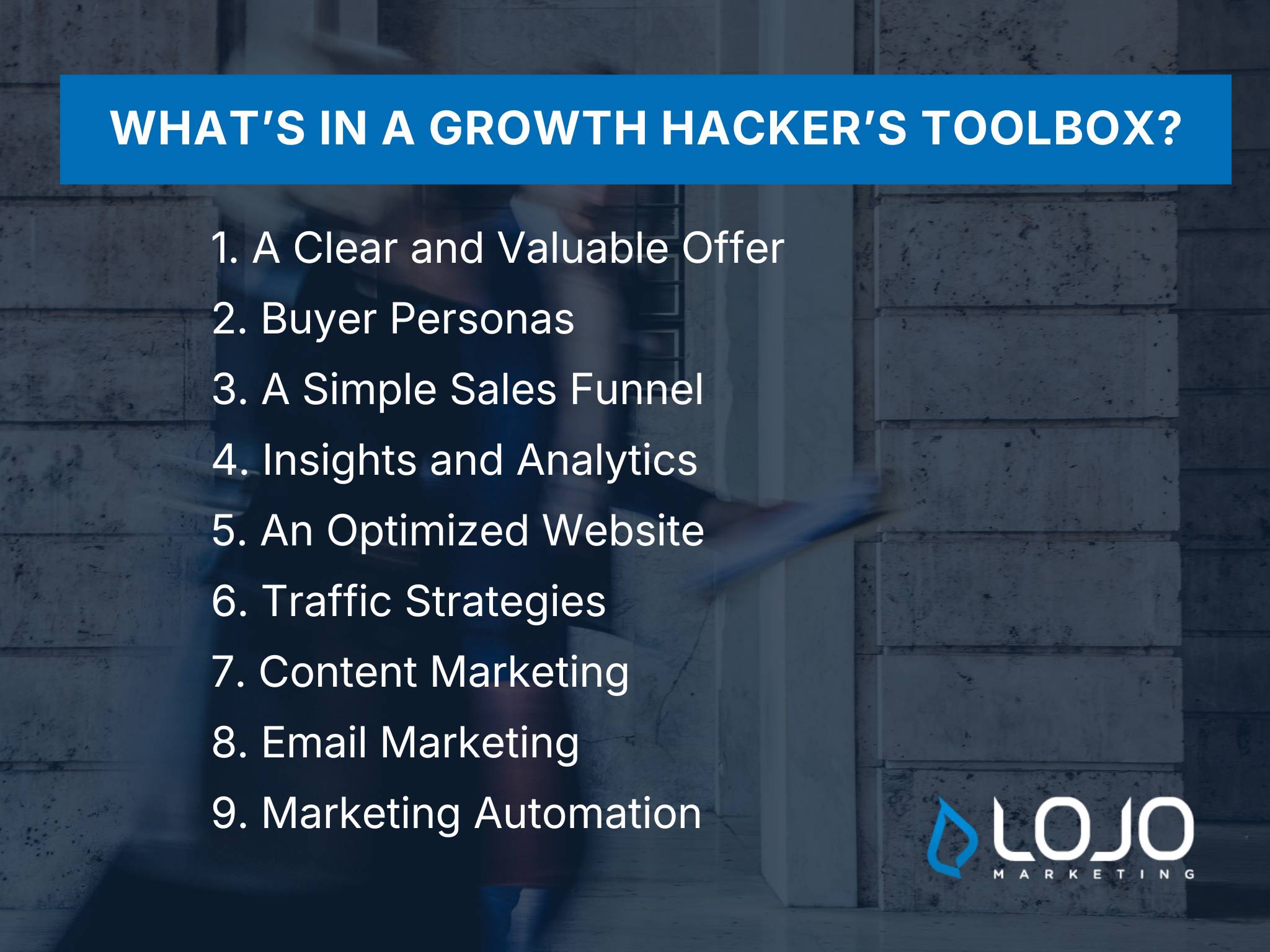
A growth-driven business uses a mix of strategy, tools, content, and systems.
Here are some of the most important pieces.
1. A Clear and Valuable Offer
Before you focus on growth, you need to know what you are offering and why it matters.
A strong offer answers questions like:
What problem do you solve?
Who do you help?
Why should someone choose you?
What outcome can they expect?
What makes the next step easy?
Your product or service does not need to be complicated. In fact, the clearer it is, the easier it is for people to understand and act.
This often means moving away from vague messaging and toward specific, customer-focused language.
Instead of saying, “We provide quality solutions,” explain what you help people do.
For example: “We help local service businesses capture more leads and follow up faster.”
That is easier to understand. It also gives your marketing a stronger foundation.
2. Buyer Personas
A buyer persona is a simple profile of your ideal customer. It helps you understand who you are trying to reach and what they care about.
A good persona may include:
Their role or situation
Their goals
Their common problems
Their concerns before buying
What they value in a provider
What questions they need answered
Identifying your buyer persona helps you avoid trying to speak to everyone.
When your message is too broad, it often becomes easier to ignore. When your message speaks clearly to the right person, it becomes easier for them to see how you can help.
3. A Simple Sales Funnel
A sales funnel is the path someone takes from first hearing about your business to becoming a customer. That path used to feel more straightforward. Someone found your business, visited your website, reached out, and made a decision.
Now, it is usually messier. A potential customer might:
Find you on Google
Check your website
Read reviews
See a social post
Ask around for recommendations
Click an ad
Watch a video
Leave and come back later
Compare you with other options
Fill out a form, call, or book a consultation
By the time they reach out, they may have already interacted with your business in several different ways.
That is why your funnel needs to be clear and consistent. Each touchpoint should help people understand what you offer, why it matters, and what to do next.
A helpful next step
Pick one common way people find your business, such as Google, social media, referrals, or paid ads. Then trace what happens next.
Where do they land?
What do they see?
How do they reach out?
How quickly do they hear back?
What happens after that?
If any part feels unclear, slow, or inconsistent, start there. Small improvements in that path can make it easier for interested leads to take the next step.
4. Insights and Analytics
Analytics help you understand what is happening in your marketing, such as:
Which pages people visit
Where leads are coming from
What content gets engagement
Which campaigns create conversions
Where people stop taking action
The key is to use analytics as a guide, not a distraction.
You do not need to track everything. Focus on the numbers that connect to the results you care about.
For example, if your goal is more booked calls, track:
Form submissions
Calendar bookings
Show-up rate
Close rate
5. An Optimized Website
Your website is one of the most important parts of your growth system. It should help visitors quickly understand who you help, what you offer, why it matters, and what they should do next.
A strong website should be easy to use, easy to read, and built around the customer’s needs.
That means:
Clear headlines
Simple navigation
Helpful service pages
Strong calls-to-action
Fast loading pages
Mobile-friendly design
Trust signals like reviews, case studies, or testimonials
6. Traffic Strategies
Once your foundation is in place, you need ways to help people find you.
Common traffic strategies include:
Search Engine Optimization
SEO helps your business show up when people search for what you offer. It is often a long-term strategy, but it can become a strong source of steady traffic and leads.
For a closer look at how search behavior is changing, watch our Community Connect session on zero-click searches and what they mean for small business visibility.
Paid Advertising
Paid ads can help you reach people faster. They work best when your offer, landing page, and follow-up process are already clear.
Social Media
Social media helps you stay visible, share helpful content, and build trust over time. It can also support referrals and customer relationships.
Online Reputation
Reviews and customer feedback can influence whether someone chooses to contact you. For many local businesses, this is a key part of growth.
The best traffic strategy depends on your business, audience, and goals. Growth-driven thinking helps you avoid chasing every channel and focus on the ones that matter most.
7. Content Marketing
Content helps people understand their problem, learn about your solution, and decide whether you are the right fit.
Different types of content support different stages of the customer journey. Not everyone who finds your business is ready to buy right away. Some people are just starting to understand their problem. Others are comparing options. Some are close to making a decision and need one more reason to reach out.
This is the reason why your content should meet people where they are.
Awareness Content
At this stage, people are usually looking for answers, context, or a better understanding of the problem they are facing.
Your content should educate, clarify, and build trust without pushing too hard for a sale.
Examples include:
Blog posts
Educational videos
Checklists
Beginner guides
Social media tips
FAQs
If you want more practical guidance as you think through your next step, our Learning Center is a good place to keep learning. You’ll find articles and guides on marketing, websites, lead generation, follow-up, and other areas that support business growth.
Consideration Content
At this point, people know they need help. They are weighing their options and trying to understand which solution makes the most sense.
Your content should make the comparison process easier and show how your service fits their needs.
Examples include:
Case studies
Service explainers
Comparison guides
Webinars
Product demos
Customer stories
Decision Content
Here, people are closer to taking action. They may be ready to book a call, request a quote, start a trial, or reach out with a final question.
Your content should make the next step clear, simple, and easy to take.
Examples include:
Consultations
Free assessments
Estimates
Trial offers
Booking pages
Strong service pages
Good content is not just about publishing more. It is about answering the right questions at the right time.
8. Email Marketing
Email remains one of the most useful tools for business growth. It gives you a direct way to stay connected with people who have already shown interest in your business. You can use it to follow up with leads, share helpful resources, educate prospects, reconnect with past customers, and encourage people to take the next step.
It also continues to perform well. According to Litmus’ State of Email Report 2025, for every $1 spent on email marketing, 35% of marketing leaders report receiving $10–$36 in return, 30% report receiving $36–$50, and 5% report receiving more than $50.
For busy business owners, email automation can make this easier to manage. A simple sequence can keep follow-up moving without requiring you to manually check in with every lead.
The key is to make your emails feel helpful, timely, and relevant. When email is connected to your larger marketing system, it can support both new leads and long-term customer relationships.

9. Marketing Automation
Marketing automation uses software to handle routine marketing and follow-up tasks automatically. That might look like sending a follow-up email after someone fills out a form, reminding a lead about an appointment, asking a customer for a review, or creating an internal task when a new opportunity comes in.
Utilizing such tools in your business can help organize and simplify tasks like:
Lead follow-up emails
Appointment reminders
Review requests
Missed call text-back
Customer onboarding messages
Pipeline updates
Internal task reminders
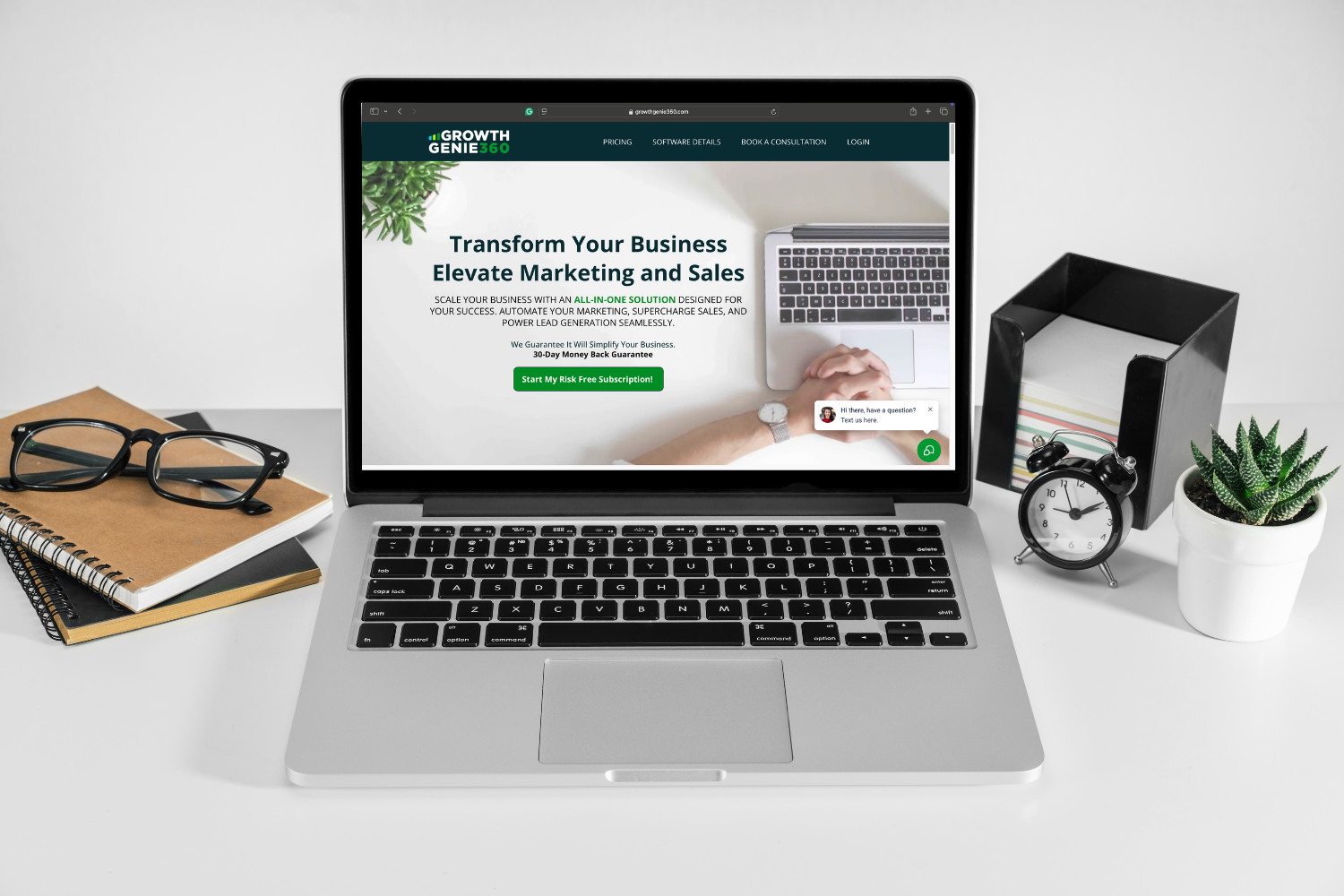
Do note that automation is not about taking the human side out of your business—it is about making sure important steps do not get missed. AI-powered systems like GrowthGenie360 are built to bring these pieces into one place, so leads, appointments, follow-ups, reviews, and customer communication are easier to manage.
When used well, automation helps you respond faster, stay organized, and create a better experience for leads and customers.
Want to see how marketing automation works in practice?
Watch this quick GrowthGenie360 video for a closer look at how the system can help organize your leads, follow-up, appointments, reviews, and customer communication. You can also visit growthgenie360.com to learn more about how this platform can support your business.
How To Start Using a Growth-Driven Mindset
You do not have to rebuild your whole marketing system at once. You can simply start with one piece. Look for the area where a little more clarity or consistency would make the biggest difference right now, such as your main call-to-action, your lead follow-up process, or your offer messaging.
Make one improvement. Then watch what happens.
Did more people click?
Did more leads reply?
Did the next step feel easier?
Did the process feel less messy?
From there, you can adjust and keep going.
That is what makes growth feel more manageable. You are not guessing your way through everything or chasing every new idea, but making focused improvements, learning from them, and building momentum over time.
Final Thoughts on Growth Hacking
Growth hacking may sound like a startup term, but the idea is useful for any business that wants to grow with more clarity.
At its core, it is about paying attention.
Pay attention to how people find you, where they get stuck, what gets them to take the next step, and what your data is telling you.
Then use what you learn to make small, steady improvements. Over time, those small improvements can create a stronger brand, a smoother customer experience, and a marketing system that feels easier to manage.
If you want a simple place to begin, start with getting a free marketing audit report. Use it to spot practical areas to tighten up your online presence and decide what to work on next.

Built for Growth. Backed by 25 Years of Trust.
For over two decades, LOJO has been a trusted partner to hundreds of businesses just like yours. Whether working directly with owners, managers, teams, or boards of directors, our goal remains the same: to be a reliable and results-driven asset to your business.
Over the years, we’ve carefully built a team of experts—each selected for their unique skills, strengths, and personalities. Our clients choose LOJO because they know we genuinely care about their success.
And after 25 years of helping businesses grow, we’re more committed than ever.

Built for Growth. Backed by 25 Years of Trust.
For over two decades, LOJO has been a trusted partner to hundreds of businesses just like yours. Whether working directly with owners, managers, teams, or boards of directors, our goal remains the same: to be a reliable and results-driven asset to your business.
Over the years, we’ve carefully built a team of experts—each selected for their unique skills, strengths, and personalities. Our clients choose LOJO because they know we genuinely care about their success.
And after 25 years of helping businesses grow, we’re more committed than ever.


Matthew Rogers, President
iProspect Check
After spending several months reviewing multiple proposals from several different companies we engaged LOJO to develop a new website that represents our company effectively. We worked initially with Stephen Platte who helped create the scope of the project. Stephen was knowledgeable and always followed up with me on time and as promised.
He "closed the deal" for LOJO with his professionalism, service orientation and easy going approach. Once we signed the contract we were introduced to Jay Kelly who would be the creative lead for LOJO. This was the most challenging part of the project for my company, as there was no shortage of ideas from our side. Jay managed the project flawlessly, and once we had all agreed to the design, Jay introduced us to Eric.
Eric Lay is one of the founders of LOJO. Eric took the design we had developed and brought it to life. We delivered content as quickly as he requested it. Eric kept the project on task and we responded by exceeding every deadline for content. In turn, once provided, literally not a day went by that Eric didn't add the content and take the next step. In just a few weeks we launched our new website. Eric is a pleasure to work with.
His positive attitude and consultative approach really enhanced the experience and made a big difference for us in the outcome of our project. We would welcome you to visit our website to take a look at the quality work of LOJO. We are very pleased with LOJO and look forward to working with them in the future as we pursue an aggressive SEO strategy."
After spending several months reviewing multiple proposals from several different companies we engaged LOJO to develop a new website that represents our company effectively. We worked initially with Stephen Platte who helped create the scope of the project. Stephen was knowledgeable and always followed up with me on time and as promised.
He "closed the deal" for LOJO with his professionalism, service orientation and easy going approach. Once we signed the contract we were introduced to Jay Kelly who would be the creative lead for LOJO. This was the most challenging part of the project for my company, as there was no shortage of ideas from our side. Jay managed the project flawlessly, and once we had all agreed to the design, Jay introduced us to Eric.
Eric Lay is one of the founders of LOJO. Eric took the design we had developed and brought it to life. We delivered content as quickly as he requested it. Eric kept the project on task and we responded by exceeding every deadline for content. In turn, once provided, literally not a day went by that Eric didn't add the content and take the next step. In just a few weeks we launched our new website. Eric is a pleasure to work with.
His positive attitude and consultative approach really enhanced the experience and made a big difference for us in the outcome of our project. We would welcome you to visit our website to take a look at the quality work of LOJO. We are very pleased with LOJO and look forward to working with them in the future as we pursue an aggressive SEO strategy."
Matthew Rogers, President
iProspect Check
The team at LOJO were wonderful to work with. They are well organized and very patient as we worked through our marketing strategy and developed a well thought out and clear action plan at a reasonable price. We will definitely be back for our future campaign needs."

Jon Crosby, Founder
Dazil